A deer (pl: deer) or true deer is a hoofed ruminant mammal of the family Cervidae. The two main groups of deer are the Cervinae, including muntjac, elk (wapiti), red deer, and fallow deer; and the Capreolinae, including reindeer (caribou), white-tailed deer, roe deer, and moose. Male deer of all species (except the water deer), as well as female reindeer, grow and shed new antlers each year. In this, they differ from permanently horned antelope, which are part of a different family (Bovidae) within the same order of even-toed ungulates (Artiodactyla).The musk deer (Moschidae) of Asia and chevrotains (Tragulidae) of tropical African and Asian forests are separate families that are also in the ruminant clade Ruminantia; they are not especially closely related to Cervidae.
Deer appear in art from Paleolithic cave paintings onwards, and they have played a role in mythology, religion, and literature throughout history, as well as in heraldry, such as red deer that appear in the coat of arms of Åland.[2] Their economic importance includes the use of their meat as venison, their skins as soft, strong buckskin, and their antlers as handles for knives. Deer hunting has been a popular activity since the Middle Ages and remains a resource for many families today.
Lion
Who do you spend the most time with?
The lion (Panthera leo) is a large cat of the genus Panthera native to Africa and India. It has a muscular, broad-chested body; short, rounded head; round ears; and a hairy tuft at the end of its tail. It is sexually dimorphic; adult male lions are larger than females and have a prominent mane. It is a social species, forming groups called prides. A lion’s pride consists of a few adult males, related females, and cubs. Groups of female lions usually hunt together, preying mostly on large ungulates. The lion is an apex and keystone predator; although some lions scavenge when opportunities occur and have been known to hunt humans, lions typically do not actively seek out and prey on humans.The lion inhabits grasslands, savannahs and shrublands. It is usually more diurnal than other wild cats, but when persecuted, it adapts to being active at night and at twilight. During the Neolithic period, the lion ranged throughout Africa and Eurasia from Southeast Europe to India, but it has been reduced to fragmented populations in sub-Saharan Africa and one population in western India. It has been listed as Vulnerable on the IUCN Red List since 1996 because populations in African countries have declined by about 43% since the early 1990s. Lion populations are untenable outside designated protected areas. Although the cause of the decline is not fully understood, habitat loss and conflicts with humans are the greatest causes for concern.
One of the most widely recognised animal symbols in human culture, the lion has been extensively depicted in sculptures and paintings, on national flags, and in contemporary films and literature. Lions have been kept in menageries since the time of the Roman Empire and have been a key species sought for exhibition in zoological gardens across the world since the late 18th century. Cultural depictions of lions were prominent in Ancient Egypt, and depictions have occurred in virtually all ancient and medieval cultures in the lion’s historic and current range.
Megaladon

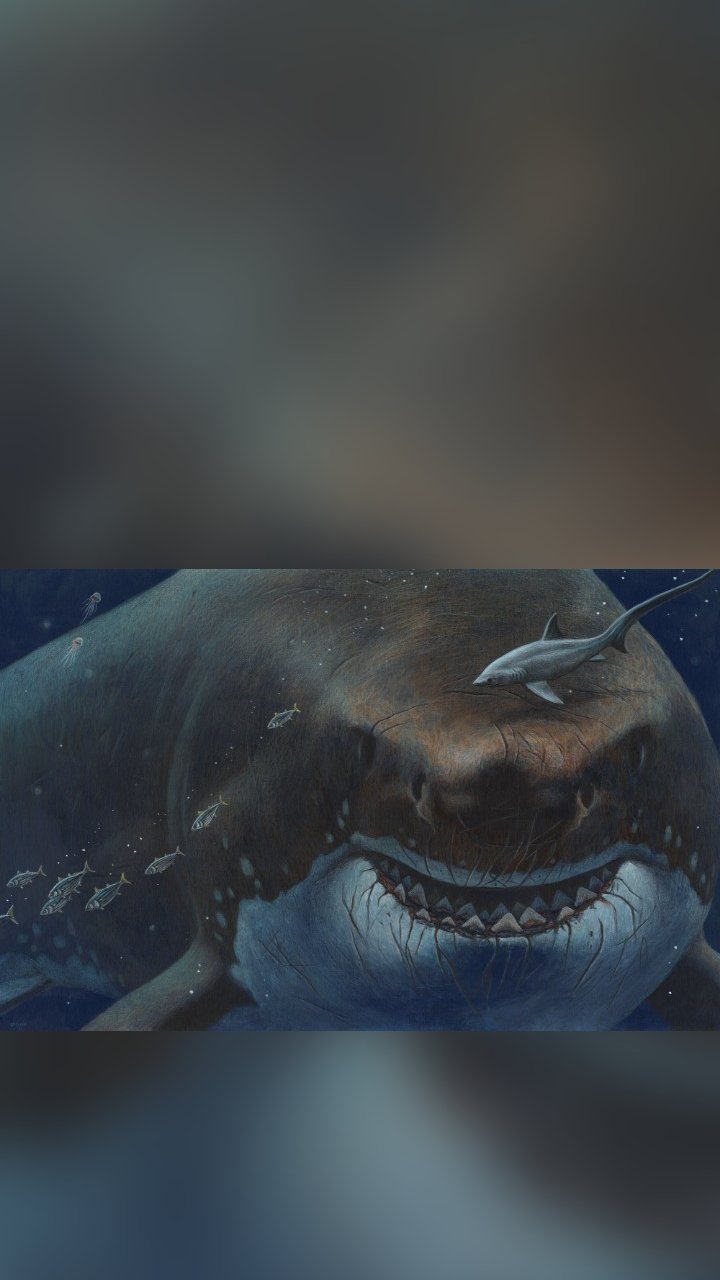
While regarded as one of the largest and most powerful predators to have ever lived, the megalodon is only known from fragmentary remains, and its appearance and maximum size are uncertain. Scientists differ on whether it would have more closely resembled a stockier version of the great white shark, the whale shark (Rhincodon typus), the basking shark (Cetorhinus maximus) or the sand tiger shark (Carcharias taurus). The most recent estimate with the least error range suggests a maximum length estimate up to 20.3 meters (67 ft), although the modal lengths are estimated at 10.5 meters (34 ft). Extrapolation from a vertebral centra with dimensions based on the great white shark suggests that a megalodon about 16 meters (52 ft) long weighs up to 48 metric tons (53 short tons), 17 meters (56 ft) long weighs up to 59 metric tons (65 short tons), and 20.3 meters (67 ft) long (the maximum length) weighs up to 103 metric tons (114 short tons). Extrapolating from a vertebral column and reconstructing a 3D model with dimensions based on all extant lamnid sharks suggests that a 16-meter-long (52 ft) individual may have been much larger than previous estimates, reaching an excess of 61.5 metric tons (67.8 short tons) in body mass; an individual of this size would have needed to consume 98,175 kcal per day. Their teeth were thick and robust, built for grabbing prey and breaking bone, and their large jaws could exert a bite force of up to 108,500 to 182,200 newtons (24,390 to 40,960 lbf).
Megalodon probably had a major impact on the structure of marine communities. The fossil record indicates that it had a cosmopolitan distribution. It probably targeted large prey, such as whales, seals and sea turtles. Juveniles inhabited warm coastal waters and fed on fish and small whales. Unlike the great white, which attacks prey from the soft underside, megalodon probably used its strong jaws to break through the chest cavity and puncture the heart and lungs of its prey.
The animal faced competition from whale-eating cetaceans, such as Livyatan and other macroraptorial sperm whales and possibly smaller ancestral killer whales. As the shark preferred warmer waters, it is thought that oceanic cooling associated with the onset of the ice ages, coupled with the lowering of sea levels and resulting loss of suitable nursery areas, may have also contributed to its decline. A reduction in the diversity of baleen whales and a shift in their distribution toward polar regions may have reduced megalodon’s primary food source. The shark’s extinction coincides with a gigantism trend in baleen whales.
Megaladon
While regarded as one of the largest and most powerful predators to have ever lived, the megalodon is only known from fragmentary remains, and its appearance and maximum size are uncertain. Scientists differ on whether it would have more closely resembled a stockier version of the great white shark, the whale shark (Rhincodon typus), the basking shark (Cetorhinus maximus) or the sand tiger shark (Carcharias taurus). The most recent estimate with the least error range suggests a maximum length estimate up to 20.3 meters (67 ft), although the modal lengths are estimated at 10.5 meters (34 ft). Extrapolation from a vertebral centra with dimensions based on the great white shark suggests that a megalodon about 16 meters (52 ft) long weighs up to 48 metric tons (53 short tons), 17 meters (56 ft) long weighs up to 59 metric tons (65 short tons), and 20.3 meters (67 ft) long (the maximum length) weighs up to 103 metric tons (114 short tons). Extrapolating from a vertebral column and reconstructing a 3D model with dimensions based on all extant lamnid sharks suggests that a 16-meter-long (52 ft) individual may have been much larger than previous estimates, reaching an excess of 61.5 metric tons (67.8 short tons) in body mass; an individual of this size would have needed to consume 98,175 kcal per day. Their teeth were thick and robust, built for grabbing prey and breaking bone, and their large jaws could exert a bite force of up to 108,500 to 182,200 newtons (24,390 to 40,960 lbf).
Megalodon probably had a major impact on the structure of marine communities. The fossil record indicates that it had a cosmopolitan distribution. It probably targeted large prey, such as whales, seals and sea turtles. Juveniles inhabited warm coastal waters and fed on fish and small whales. Unlike the great white, which attacks prey from the soft underside, megalodon probably used its strong jaws to break through the chest cavity and puncture the heart and lungs of its prey.
The animal faced competition from whale-eating cetaceans, such as Livyatan and other macroraptorial sperm whales and possibly smaller ancestral killer whales. As the shark preferred warmer waters, it is thought that oceanic cooling associated with the onset of the ice ages, coupled with the lowering of sea levels and resulting loss of suitable nursery areas, may have also contributed to its decline. A reduction in the diversity of baleen whales and a shift in their distribution toward polar regions may have reduced megalodon’s primary food source. The shark’s extinction coincides with a gigantism trend in baleen whales.

